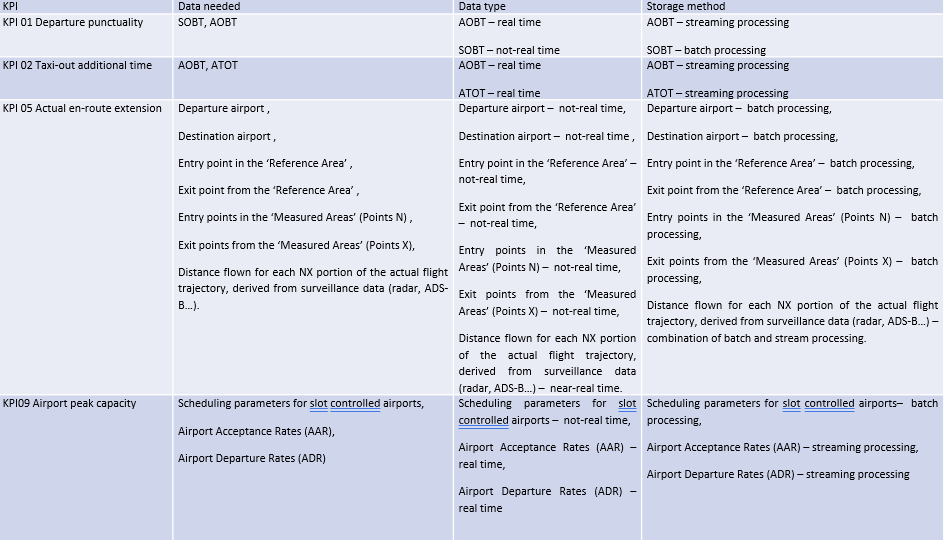
Data collection should be business driven. More data does not necessarily mean more valuable information, it is important to determine the value of the data when collecting it.
ATM performance data will need to be stored in suitable data storage facilities. Storage methods include:
- Structured data storage means that the data is stored in a relational database.
- Columnar data storage means that the storage is done in a key-value format.
- Graph data storage means that the data is stored using a graph-based data model, which consists of nodes and edges.
- File storage means that the data is managed using a file-based storage system, which supports operations such as upload, download, reading, writing, copying, and moving of files.
Performance data computing is used to meet the data processing and computing needs of different businesses and levels in the data governance process, providing a computing engine for data fusion and analysis, including:
- Batch processing focuses on offline analysis of various data types, including structured and unstructured data.
- Stream processing focuses on acquiring real-time message data and performing high-throughput, low-latency real-time computing.
- Graph processing focuses on the expression of graph data based on the attribute graph model.
Example of processing
Data warehouse is a mature technology used as a classic tool for performance data analysis. Each organisation should set up its data warehouse according to its need.
Data analysis is the mining, sense-making and presentation of business value, which includes techniques such as:
- Visual analytics involves the static and dynamic visualization display of high-dimensional data. The forms of visualization include, but are not limited to, bar charts, pie charts, line charts, radar charts, timelines, heat maps, etc.
- Statistical analysis means supporting typical statistical analysis applications such as numerical analysis, central tendency analysis, and dispersion degree analysis, as well as creating custom templates to save commonly used statistical analysis schemes.
- The machine learning analysis capability means supporting the import, verification, and export of machine learning models. It should provide process components for machine learning, including feature extraction, feature transformation, feature selection, model selection, cross-validation, model tuning, etc. It also should support a variety of machine learning algorithms.